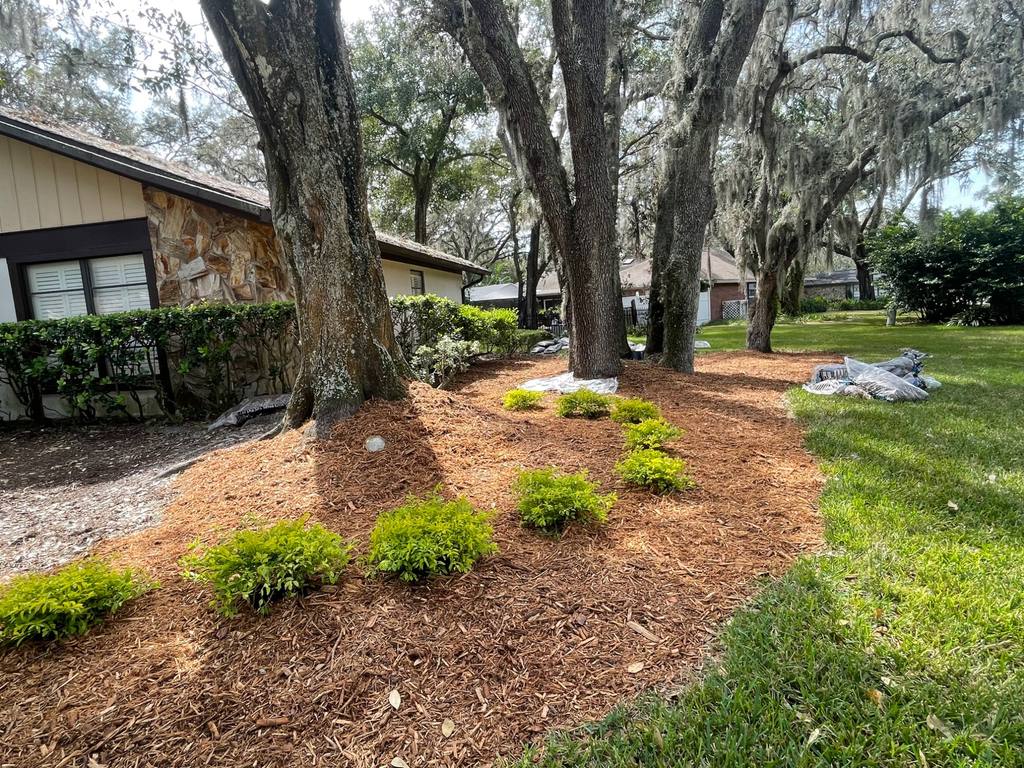
Mulch is doing two jobs in a Tampa bed. It is holding moisture in the soil through a dry spring, and it is keeping light off weed seed so it never germinates. Both of those depend almost entirely on depth, which is why a bed that was mulched in March can be full of weeds by June.
The number is two to three inches. Under two and there is not enough material to block light — weeds come straight up through it, and the soil underneath still dries out in the sun. Over about four and you have created a different problem: water from a light rain or a short sprinkler cycle never makes it through to the soil at all. It wets the mulch and evaporates. Thick mulch can also mat down into a crust that actively sheds water off the bed.
The other thing that decides whether mulch works is what happens underneath it before it goes down. Mulch does not kill established weeds. Spreading it over a bed full of them buries them for a fortnight and then they come through, and now they are rooted into a layer that holds moisture beautifully. Weeds have to come out at the root first. If a bed is badly gone, that is the real work of the job and the mulch is the easy part at the end.
A cut edge matters more than people expect, too. A bed with a proper edge cut between it and the lawn holds its shape and its material. Without one, mulch migrates onto the grass every time it rains, the line between bed and lawn blurs over a season, and the grass creeps in. Recutting that edge is what makes a mulched bed look sharp rather than just fresh.
Now the thing we see most often and the reason it is worth writing this at all: mulch piled up against trunks and stems. You have seen it — a cone of mulch heaped a foot up the trunk of a tree, often on commercial properties where somebody was paid by the yard. It is called volcano mulching, and it is genuinely harmful.
Bark above the root flare is not built to be wet. It is built to be exposed to air. Bury it in a moisture-holding material and it stays damp continuously, which softens the bark, invites rot at the collar, and gives insects and disease a way in. Worse, trees respond to buried trunks by sending roots out into the mulch itself, where they circle the trunk and eventually girdle it. That process takes years, which is exactly why nobody connects the dying tree back to the mulch.
The fix is simple and takes seconds per plant: pull the mulch back so you can see the flare where the trunk widens out into the roots. A few inches of clear space around the base. The mulch should look like a doughnut, not a volcano. The same goes for shrubs and the stems of bedding plants.
On material — in Florida the practical choice is between pine bark, cypress, and dyed hardwood in red, brown or black. The dyed mulches hold their colour longest, which is why they are the usual pick for a frontage that has to look consistent. Pine bark breaks down faster and improves the soil more as it does, which suits planting beds you actually garden in. Stone lasts indefinitely and never needs topping up, but it holds heat and does nothing for the soil, so it suits accent areas and drainage strips more than it suits mixed planting.
Whichever you choose, Florida beds generally need topping up once or twice a year. Organic mulch breaks down — that is not a defect, it is part of what it is doing for the soil — and a bed that was at three inches in spring is often down near one by the following spring.
Beds needing weeding, edging and a fresh layer? Call (813) 647-4309 for a free estimate.