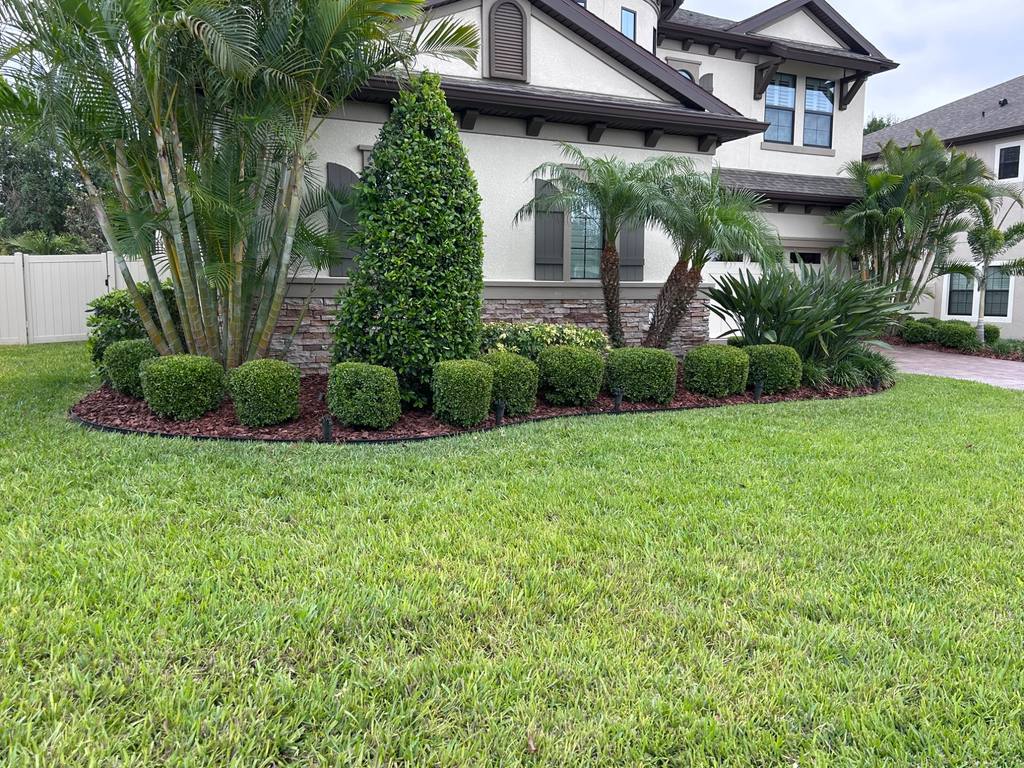
When somebody calls us about a lawn that has gone thin and patchy, the conversation usually starts with what they have been putting on it. Fertiliser, weed and feed, a fungicide somebody at the store recommended. Almost always, the actual problem is simpler and free to fix: the grass is being cut too short.
St. Augustine — which is what most Tampa lawns are — wants to be tall. Around three and a half to four inches. That feels wrong to a lot of people, because a short lawn looks tidier the afternoon it is cut. But a St. Augustine lawn does not defend itself with density at the soil line the way northern grasses do. It defends itself with shade. A tall canopy shades its own soil, which keeps moisture in and, more importantly, keeps sunlight off the weed seed sitting in the top half-inch of dirt.
Cut that canopy down to two inches and you have opened the soil up to full Florida sun. It dries out faster, so the lawn needs more water to look the same. And every dormant crabgrass and dollarweed seed in the bed now gets the light it was waiting for. The weeds that show up three weeks after a scalping were not a coincidence and they were not a fertiliser problem.
There is a second rule that matters just as much, and it is the one that catches out anyone mowing every other week through the summer: never take off more than a third of the blade in a single pass. Grass feeds itself through its leaves. Removing most of the leaf at once forces the plant to spend its root reserves regrowing, and a lawn that does that repeatedly ends up with a shallow root system — which then cannot find water in a dry spring, which looks like a watering problem, which gets treated with more water.
Do the arithmetic on a fortnightly schedule in July. A St. Augustine lawn growing well will put on well over an inch in two weeks. If you are cutting back to three and a half inches, the grass has to be at five inches or under for that rule to hold, and in the wet season it will not be. That is the whole case for weekly service between April and October — not that the lawn looks shaggy at ten days, but that the cut itself stops doing damage.
Then there is the blade. A dull mower blade does not cut grass, it tears it, and a torn leaf tip dies back and browns off. If a lawn looks faintly tan or grey a day or two after every mow, walk out and look at the tips closely. A clean cut is a clean cut. A ragged, whitened, frayed tip is a blade that needed sharpening several months ago. This is the single most common reason a lawn looks worse after being cut than before, and it has nothing at all to do with the grass.
One more thing worth saying because people ask every time: leave the clippings. Bagging a normal mow throws away nitrogen the lawn just made. Mulched clippings break down within days in this heat and feed the soil. The only time to bag is if the lawn has got long enough that the clippings sit in visible rows and smother what is underneath — which, again, is an argument for cutting more often rather than for bagging.
None of this costs anything. Raise the deck, cut weekly through the growing season, and keep a sharp blade on the mower. Most of the lawns we take over look noticeably better within a month on nothing but that.
Want us to take it off your hands? Call (813) 647-4309 for a free estimate on weekly or biweekly service.